
We've been through a fair few TV chefs (and their shows) here - Nigella Express, Delia's How to Cheat and Jamie Oliver's various vehicles. I've been critical at times, I admit.
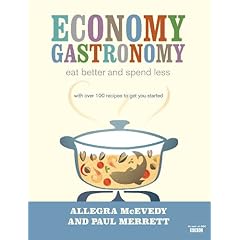
The latest TV show to have a go is Economy Gastronomy, which is based around a cookery book just produced by Allegra McEvedy and Paul Merritt, both of whom I don't hold a grudge against, so that's a start. Allegra's the brain behind Leon's (one word: YES) and Paul, well, I don't know as much about him but he doesn't bug me, so there.
My brief with all these shows is to put them to the test on how realistically good for you the recipes are. Economy Gastronomy ticks two boxes I strive to tick myself - tasty and not too expensive. But if they blow it out of the water with lots of fatty or unhealthy foods, I'll call them out on it - and suggest a few tweaks of my own.
One of their latest recipes is for a slow-roasted shoulder of lamb with grilled vegetable and white bean salad and smoked aubergine. Those early autumn flavours spring into my mouth just thinking about it - especially the smoked aubergine (which I had recently at the Empress of India with seared scallops, but that's another story...).
By my calculations - and that's assuming you have all lean parts of the shoulder - the menu comes to just under 900 calories. If you're not doing that, it's at least 1200 calories per serving. Now, I've seen worse - getting a burger and chips at a Wetherspoons [pdf] is likely to set you back at least that - but 900 calories to my mind is really more of a special treat rather than an economic gastronomic meal.
It could have been much worse, though - they were sparing with the oil, didn't go crazy on the feta cheese, and incorporated lots of veggies. I think it's really just the lamb that's sending us over the top - so I'd recommend instead of reducing the other ingredients, to simply reduce the portion size of lamb. Go ahead and cook the whole thing, but reserve some of the lamb for later in the week (which surely, Allegra and Paul would approve of).
From what I've seen so far, I'm more positive than negative on the project. I'll keep sizing up the recipes. In the meantime, what do you think? Have you tried any of their recipes?
Showing posts with label tv food. Show all posts
Showing posts with label tv food. Show all posts
Monday, 14 September 2009


Tuesday, 18 March 2008
Delia disappoints
Last night I finally caught Delia’s new show, inspiringly titled Delia (back to basics, love). The show, based on her new cookery book, How to Cheat at Cooking, offers the viewer recipes that ostensibly will help him or her avoid fresh food.
I have a few problems with her approach:
-The use of the word ‘cheat’. Why stigmatise any cooking at home with such a word? Why call using marinated roasted red peppers and jarred mayonnaise to make red pepper mayonnaise ‘cheating’? I would argue that in the winter that it’s a seasonal approach to cooking. The peppers in that jar were likely grown in the heat of summer and simply preserved. I resent the implication that using preserved goods is cheating.
Furthermore, using tinned dressed crab is not cheating either. Fresh crab is not readily available throughout Britain, and using the tinned version to enhance the flavour of a soup or a dip should not be an undesirable option.
-I do find fault in substituting ingredients for their fresh, readily available, and for the most part inexpensive, counterparts. Tinned meat and frozen mash, this means you. Fresh potatoes and lean mince are surely the better choice. And, until the tins and bags go some way to stating otherwise, we can only assumed that the source of the produce is not particularly appealing.
-Which brings me to my final point. Why distinguish between the source of some ingredients (ie, pesto: “Make sure it’s Italian,” she remonstrates) and not others? She’s not banging on about the tinned mince in the same fashion: “Make sure it’s from Cheshire”)
All in all, I think it’s a flawed approach. I don’t like being told what I’m doing is cheating. I’m all for getting more cooks in the kitchen, but not like this.
We’ll see what next week’s episode is like, if I can stomach it.
I have a few problems with her approach:
-The use of the word ‘cheat’. Why stigmatise any cooking at home with such a word? Why call using marinated roasted red peppers and jarred mayonnaise to make red pepper mayonnaise ‘cheating’? I would argue that in the winter that it’s a seasonal approach to cooking. The peppers in that jar were likely grown in the heat of summer and simply preserved. I resent the implication that using preserved goods is cheating.
Furthermore, using tinned dressed crab is not cheating either. Fresh crab is not readily available throughout Britain, and using the tinned version to enhance the flavour of a soup or a dip should not be an undesirable option.
-I do find fault in substituting ingredients for their fresh, readily available, and for the most part inexpensive, counterparts. Tinned meat and frozen mash, this means you. Fresh potatoes and lean mince are surely the better choice. And, until the tins and bags go some way to stating otherwise, we can only assumed that the source of the produce is not particularly appealing.
-Which brings me to my final point. Why distinguish between the source of some ingredients (ie, pesto: “Make sure it’s Italian,” she remonstrates) and not others? She’s not banging on about the tinned mince in the same fashion: “Make sure it’s from Cheshire”)
All in all, I think it’s a flawed approach. I don’t like being told what I’m doing is cheating. I’m all for getting more cooks in the kitchen, but not like this.
We’ll see what next week’s episode is like, if I can stomach it.
Thursday, 3 January 2008
food TV
Well, we left 2007 in a haze of Nigella Express, Jamie at Home and Heston Blumenthal. Oh, and Gordon. He’s always on. What’s new for 2008, you ask?
Channel 4 is encouraging us to think before we eat. Interesting, they’re not asking us to think before we watch. Can someone do a documentary on Channel 4? Anyway…
Lovable tree-hugger Hugh of the River Cottage is back on television following his fish book and his fantastic column in the Guardian weekend. (I missed him over Christmas – Angela Hartnett is great, but I love Hugh’s back-to-basics approach.)
His show – Hugh’s Chicken Run – aims to show us just what buying a battery chicken means. The kindly man wants to encourage us – and the supermarkets – to buy free-range. It sounds like this one could get a bit gruesome.
More chicken: Jamie is back (naturally) with Jamie’s Fowl Dinners. Evidently, 9 billion eggs and 900 million chickens are produced every year in the UK. We’re in for another lesson to learn about the different ways of rearing chicken and another debate about the reality of chicken production.
More and more gordo, our gin-soliciting man. In Cook-A-Long-A-Gordon, a one hour special, we’re going to see how to cook quickly without sacrificing anything.
Eat Yourself to Death is another You Are What You Eat without the poo-crazed lady running around. Be prepared to be disgusted by what food can do to you.
In what sounds potentially interesting, The Diet that Time Forgot takes us to Pakistan’s Shimshal people, who are said to eat the healthiest diet in the world. There are no additives, saturated fats or heavily-sugared foods.
The Raw Food Diet goes under the microscope in Health Food Junkies. We learn more about the diet that prohibits eating food that is about 45 degrees C.
What do you think? I myself am likely to check these out initially, but I’m not sure how long I’ll last. I’d rather spend my time in the kitchen…
Channel 4 is encouraging us to think before we eat. Interesting, they’re not asking us to think before we watch. Can someone do a documentary on Channel 4? Anyway…
Lovable tree-hugger Hugh of the River Cottage is back on television following his fish book and his fantastic column in the Guardian weekend. (I missed him over Christmas – Angela Hartnett is great, but I love Hugh’s back-to-basics approach.)
His show – Hugh’s Chicken Run – aims to show us just what buying a battery chicken means. The kindly man wants to encourage us – and the supermarkets – to buy free-range. It sounds like this one could get a bit gruesome.
More chicken: Jamie is back (naturally) with Jamie’s Fowl Dinners. Evidently, 9 billion eggs and 900 million chickens are produced every year in the UK. We’re in for another lesson to learn about the different ways of rearing chicken and another debate about the reality of chicken production.
More and more gordo, our gin-soliciting man. In Cook-A-Long-A-Gordon, a one hour special, we’re going to see how to cook quickly without sacrificing anything.
Eat Yourself to Death is another You Are What You Eat without the poo-crazed lady running around. Be prepared to be disgusted by what food can do to you.
In what sounds potentially interesting, The Diet that Time Forgot takes us to Pakistan’s Shimshal people, who are said to eat the healthiest diet in the world. There are no additives, saturated fats or heavily-sugared foods.
The Raw Food Diet goes under the microscope in Health Food Junkies. We learn more about the diet that prohibits eating food that is about 45 degrees C.
What do you think? I myself am likely to check these out initially, but I’m not sure how long I’ll last. I’d rather spend my time in the kitchen…
Friday, 9 November 2007
cooking the books
Have you heard about this new cooking show on Five? Up until about a week ago, I hadn’t. But I was approached in that trendiest of online bars, Facebook, by the show, looking for audience members for the tapings. They saw the blog and realised, obviously, that my life is consumed by the food I eat.
Cooking the Books, which is hosted by a former Hollyoaks man Jeremy Edwards, invites TV chefs with their own cookbooks to come on the show and try out their recipes. They then have to battle a lesser-known cook to see who makes the best version. There’s also a segment in which a disguised celebrity guest (who I did not even recognise once they’d “unveiled” him) to cook a recipe from a celebrity chef’s book.
Audience members must bring in a dish too, cooked from a book of their own. One lucky member (which just happened to be me, hooray!) gets to taste the chefs’ cook-off and decide on a winner.
First things first – what did I bring? Well, I brought those Jamie Oliver butternut squash muffins that I’ve been banging on about lately. But this time, I did make the frosting too – a crème fraiche-icing sugar combo loaded with Clementine zest. I made my normal changes, cutting down on the flour, sugar and oil – and for the icing I used reduced-fat crème fraiche in place of regular. They get plated up with the rest of the audience (called “the cookery club”) for the show. So keep your eyes peeled when you watch the show.
So who was the “famous chef”? Well, that TV-loving Ready, Steady, Cooker Ainsley Harriott of course. He’s got a new book out (naturally). His recipe was a haddock kedgeree, loaded with lots of fun goodies and topped off with a curry sauce. He battled some chick called Lotte, who made her version of a kedgeree with smoked salmon and cream.
It all came down to moi to decide which one was best. When the director briefed me on what I would need to do, I thought it interesting that he acted as though I would pick Ainsley’s, but he of course assured me I could pick the one I thought was best. I did end up picking Ainsley’s, partially because of the fun curry sauce. In actuality, I didn’t really prefer one over the other, especially considering that I only got two seconds to try them!
But later I learned that Ainsley had lost the previous two battles at earlier tapings and was getting a bit sad. Poor man, with all his cooking shows, huh?
All in all, it was an interesting experience, though there was lots of sitting still and clapping wildly for different tapes. Most enlightening was watching the chefs prepare the meals – on TV, it really looks like they cook a lot of it there and then. Of course, they don’t, especially since it’s not live, like Saturday Kitchen.
We did get the whole cattle-herding treatment, though, and I was promised two free cookbooks (Ainsley’s and another chef’s) which never ended up in my hands, sadly. I did get to meet and chat with Ainsley, who asked me if I cook for myself or for my husband (who came along for the show)… I duly informed him that I cooked for two, of course!
Keep an eye out for the show, in any case, weeknights at
Tuesday, 16 October 2007
food tv tonight: jamie oliver and heston blumenthal
I tried to watch Nigella last night, but simply couldn't. She's too much to take. I read an excellent description of her in a London paper yesterday: a woman who appears like she's constantly suppressing a state of ecstasy. It must be chocolate-induced.
So tonight, Jamie and Heston, on 4 and BBC2, respectively.
Jamie's recipes don't really do it for me, though I liked the Naked Chef. I don't think his style of cooking translates well onto the page. He's a bit out there, and a little too slapdash for my liking, though I respect the Italian origins of his cooking. But his roast duck and pumpkin salad, though exciting, was an absolute mess - it looked like the scraps from my chopping and dicing.
I did learn a few things: you don't have to remove the butternut squash's peel before cooking -the squash tastes lovely and chewy skin-on, Jamie convinces us. Another butternut wonder: squash muffins, which I'd love to try. The frosting sounds tasty (and fun for the kiddies), but perhaps not absolutely necessary. His butternut squash soup didn't quite pass the inventiveness test, though, but things are classic for a reason.
On to Heston Blumenthal, ever the modest chef, now in pursuit of perfection. He's owner of three Michelin stars and head chef of the restaurant voted second best in the world, The Fat Duck. Using scientific techniques - and likely a bit of Herve This' molecular gastronomy (though he hates the concept), the man is on a mission.
First on his list of things to do today: perfecting chicken tikka masala. Naturally, testing every Indian restaurant within sight - and a long plane ride - needs doing (if only in the name of research). He finds that British chicken tikka masala (shock! horror!) doesn't actually exist in India. The closest dish is butter chicken.
Heavily bespectacled Heston heads outside to build his own cooking pit. Oh, isn't it lucky he has three men and a bulldozer to help him - and some authentic Indian cooks. One vividly orange yogurt marinade later, and we're getting somewhere. but Heston does not just take his word for it - he gets chemical engineers to test two marinades - one with yogurt, one without - to test the effects. He finds that the yogurt has an extra effect on uncooked meat. Extensive experiments also conclude brining the chicken first adds an extra moistness. And a chickpea roux in the mixture - love it.
Though tasty, Heston's tikka takes time - almost 24 hours, including separate marinating times. And don't forget the necessary equipment, like a pressure cooker and bricks in a barbie in the garden (and a MRI machine, should you have one handy). But good food is worth waiting for, innit?
So tonight, Jamie and Heston, on 4 and BBC2, respectively.
Jamie's recipes don't really do it for me, though I liked the Naked Chef. I don't think his style of cooking translates well onto the page. He's a bit out there, and a little too slapdash for my liking, though I respect the Italian origins of his cooking. But his roast duck and pumpkin salad, though exciting, was an absolute mess - it looked like the scraps from my chopping and dicing.
I did learn a few things: you don't have to remove the butternut squash's peel before cooking -the squash tastes lovely and chewy skin-on, Jamie convinces us. Another butternut wonder: squash muffins, which I'd love to try. The frosting sounds tasty (and fun for the kiddies), but perhaps not absolutely necessary. His butternut squash soup didn't quite pass the inventiveness test, though, but things are classic for a reason.
On to Heston Blumenthal, ever the modest chef, now in pursuit of perfection. He's owner of three Michelin stars and head chef of the restaurant voted second best in the world, The Fat Duck. Using scientific techniques - and likely a bit of Herve This' molecular gastronomy (though he hates the concept), the man is on a mission.
First on his list of things to do today: perfecting chicken tikka masala. Naturally, testing every Indian restaurant within sight - and a long plane ride - needs doing (if only in the name of research). He finds that British chicken tikka masala (shock! horror!) doesn't actually exist in India. The closest dish is butter chicken.
Heavily bespectacled Heston heads outside to build his own cooking pit. Oh, isn't it lucky he has three men and a bulldozer to help him - and some authentic Indian cooks. One vividly orange yogurt marinade later, and we're getting somewhere. but Heston does not just take his word for it - he gets chemical engineers to test two marinades - one with yogurt, one without - to test the effects. He finds that the yogurt has an extra effect on uncooked meat. Extensive experiments also conclude brining the chicken first adds an extra moistness. And a chickpea roux in the mixture - love it.
Though tasty, Heston's tikka takes time - almost 24 hours, including separate marinating times. And don't forget the necessary equipment, like a pressure cooker and bricks in a barbie in the garden (and a MRI machine, should you have one handy). But good food is worth waiting for, innit?
Sunday, 14 October 2007
pork and apples
A classic combination, but one that needs a bit of updating since pork chops and applesauce was crowned as Peter Brady's favourite dish in The Brady Bunch. (He was trying to make like Bogart.)
My husband coats Bramley apple sauce all over his pork, so I was keen to devise a recipe that would allow him to enjoy the tart apple flavour without needing to resort to the jar.
Pork, apples, onion, courgettes and potatoes: a five-star five-ingredient meal that needs only a few extra bits from the pantry to make a fantastic and fresh Saturday night dinner.
Pork tenderloin is one of my favourite cuts, because it is so tender, yet not particularly fatty, but care must be taken not to let it dry out. In this sense it is quite similar to chicken breast - so searing it first before roasting (and then roasting it wrapped up in foil) should keep it quite juicy. However, a few extra minutes of roasting time will be required.
Seared and roasted pork tenderloin with apples and onion, served with courgettes and mash
(serves 2)
a cut of pork tenderloin (will likely serve more than 2, but leftovers can be saved for lunch the next day)
1 large apple, sliced across into about 4 rings, then cored
1 large onion, sliced across into about four rings
dried thyme
about 10 sprays of olive oil
250 g potato, peeled and cubed
1 large courgette, sliced
a splash of milk
salt and freshly ground black pepper
Preheat the oven to 200 C. Season the pork tenderloin.
Heat the oil in a large pan, and once hot, add the pork tenderloin, searing on all four sides for about 30 seconds each.
Add to a large piece of foil with the onions and apple and close up.
Roast for 35 minutes.
About 15 minutes before finishing, set the potatoes to boil for about 10 minutes. Drain and return to the pan with a splash of milk. Season and mash; keep covered.
When the pork is finished, remove from the oven and allow to sit for 10 minutes before carving.
Re-heat the pan that the pork was seared in, and add the courgettes and saute.
Slice the pork into thin medallions and serve with the mash, courgettes, and 2 pieces each of onion and apple. Drizzle the juices in the roasting tin over the pork and serve.
My husband coats Bramley apple sauce all over his pork, so I was keen to devise a recipe that would allow him to enjoy the tart apple flavour without needing to resort to the jar.
Pork, apples, onion, courgettes and potatoes: a five-star five-ingredient meal that needs only a few extra bits from the pantry to make a fantastic and fresh Saturday night dinner.
Pork tenderloin is one of my favourite cuts, because it is so tender, yet not particularly fatty, but care must be taken not to let it dry out. In this sense it is quite similar to chicken breast - so searing it first before roasting (and then roasting it wrapped up in foil) should keep it quite juicy. However, a few extra minutes of roasting time will be required.
Seared and roasted pork tenderloin with apples and onion, served with courgettes and mash
(serves 2)
a cut of pork tenderloin (will likely serve more than 2, but leftovers can be saved for lunch the next day)
1 large apple, sliced across into about 4 rings, then cored
1 large onion, sliced across into about four rings
dried thyme
about 10 sprays of olive oil
250 g potato, peeled and cubed
1 large courgette, sliced
a splash of milk
salt and freshly ground black pepper
Preheat the oven to 200 C. Season the pork tenderloin.
Heat the oil in a large pan, and once hot, add the pork tenderloin, searing on all four sides for about 30 seconds each.
Add to a large piece of foil with the onions and apple and close up.
Roast for 35 minutes.
About 15 minutes before finishing, set the potatoes to boil for about 10 minutes. Drain and return to the pan with a splash of milk. Season and mash; keep covered.
When the pork is finished, remove from the oven and allow to sit for 10 minutes before carving.
Re-heat the pan that the pork was seared in, and add the courgettes and saute.
Slice the pork into thin medallions and serve with the mash, courgettes, and 2 pieces each of onion and apple. Drizzle the juices in the roasting tin over the pork and serve.
Subscribe to:
Posts (Atom)


 Posts
Posts

